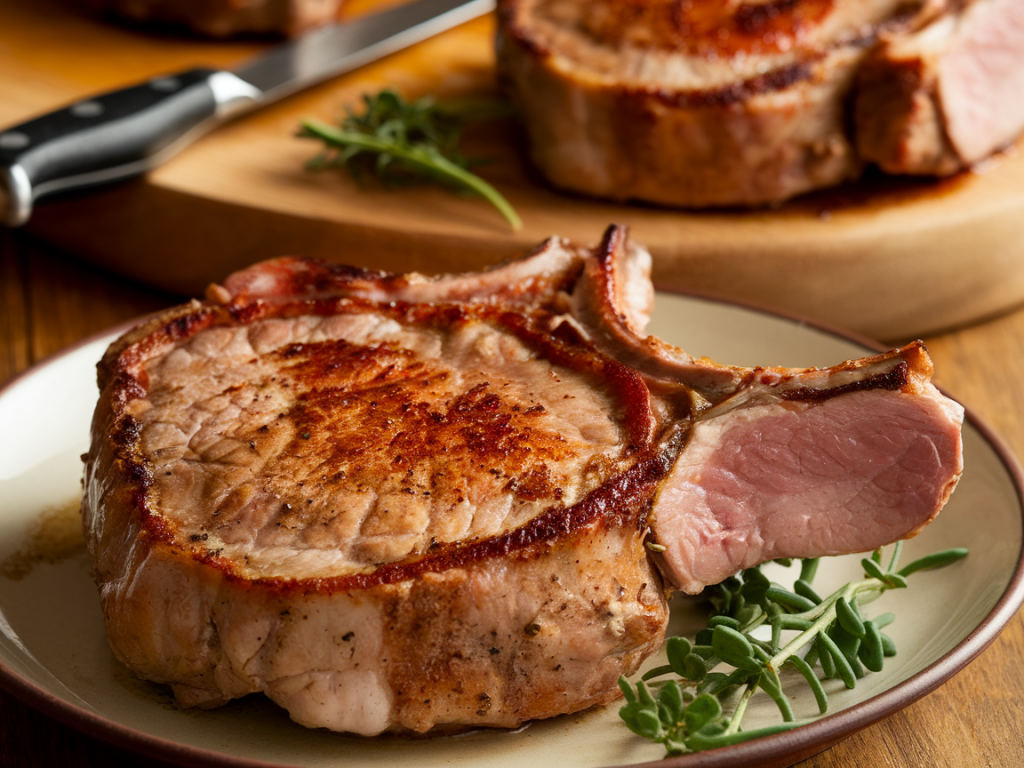
I buy cheap pork cuts on purpose. They’re forgiving, packed with flavor, and—if you treat them right—can come out with the same satisfying crust and soft interior you expect from a steak. Over the years I’ve fed my family on pork shoulder steaks, country-style ribs, and pork collar, and I’ve landed on a simple 20-minute method that reliably tenderizes these cuts and gets them to steak-like levels of satisfaction without hours of braising or expensive meat thermometers.
Which cheap pork cuts can cook like steak?
Here are the cuts I reach for when I want steak-like results without the steak price. These cuts have enough fat marbling to reward a quick, high-heat sear:
- Pork shoulder / Boston butt steaks (often sold as pork steaks) — flavorful, fatty, and forgiving when sliced thick and seared.
- Pork collar / neck (sometimes labeled as coppa or pork collar) — rich marbling and excellent for fast sears.
- Country-style ribs (boneless) — basically shoulder cuttings; treat them like thick steaks.
- Pork shoulder blade chops — bone-in or boneless, great for a crusty sear.
- Pork skirt or flank-like strips — less common, but when sliced across the grain and quickly seared they’re tasty and tender.
Note: Pork loin chops and tenderloin are lean and can be cooked like a steak, but they demand more careful timing to avoid dryness. The cuts above have the fat that makes a quick sear sing.
The 20-minute method that makes cheap pork tender every time
This is the routine I use when I want dinner fast and delicious. It combines a short alkaline “velveting” to loosen proteins, a quick dry-brine to improve flavor and surface moisture control, and a blistering hot sear to form a steak-worthy crust. Total time from start to table: about 20 minutes (hands-on time ~10–12 minutes).
What you’ll need: a cast-iron or heavy skillet, kosher salt (Morton or Diamond Crystal both work—adjust amounts if using finer table salt), baking soda (Arm & Hammer), pepper, neutral oil with a high smoke point (grapeseed, vegetable, or canola), butter, and an instant-read thermometer if you like to be precise.
- Step 1 — Quick baking-soda treatment (8–12 minutes): Pat the pork dry, then sprinkle a light dusting of baking soda over both sides—about 1/8 to 1/4 teaspoon per side for a typical 1-inch-thick piece. Let sit at room temperature for 8–12 minutes. This raises the surface pH and loosens muscle proteins so the meat stays tender through a fast cook. Don’t go longer than 15 minutes for thin pieces; otherwise the texture can become slightly mushy.
- Step 2 — Rinse and dry (1–2 minutes): Quickly rinse the baking soda off under cold water and immediately pat the meat very dry with paper towels. This step matters: moisture is the enemy of a good sear.
- Step 3 — Dry-brine and season (2 minutes): Sprinkle kosher salt and freshly cracked black pepper on both sides. If you have the time, a 10–15 minute dry-brine is ideal, but even a quick 2-minute seasoning helps. Salt draws out a little moisture then reabsorbs it, improving flavor and texture.
- Step 4 — Sear hard and fast (5–8 minutes): Heat a heavy pan until it’s smoking hot, add a thin film of oil, then add the pork. Don’t overcrowd. For 3/4–1-inch steaks: 3–4 minutes per side for a nice crust. For thicker, 1¼–1½-inch pieces: 4–5 minutes per side. In the last 30–60 seconds, add a knob of butter and baste to finish.
- Step 5 — Rest (2–3 minutes): Remove the meat to a plate and rest for a few minutes. Resting lets juices redistribute and keeps the pork juicy rather than dry.
Why this works
The baking soda step is the secret sauce here. It’s a mild, food-safe alkaline tenderizer chefs use in many quick-cook techniques (think Chinese “velveting”). It changes the proteins at the surface so they don’t seize up as hard or as fast under high heat, so you get tenderness without long braises. Combined with proper drying and a screaming hot pan, you get an ultra-browned crust and a tender interior—very steak-like.
Internal temperature and doneness
USDA recommends 145°F (63°C) with a 3-minute rest for safety. For shoulder cuts that are fattier, I usually shoot for 140–145°F and remove the meat earlier, then rest to let carryover push it up slightly. If you prefer a firmer texture, push to 150°F, but expect a drier bite.
| Thickness | Approx cook time per side | Target temp |
| 3/4 inch | 3–4 min | 140–145°F |
| 1 inch | 4–5 min | 140–145°F |
| 1¼–1½ inch | 5–6 min | 145°F |
Seasoning, sauces, and finishing ideas
I keep things simple: coarse salt, black pepper, a little smoked paprika or garlic powder if I’m in the mood. But pork plays nicely with all sorts of finishes:
- Simple pan sauce: deglaze with a splash of white wine or apple cider, add a knob of butter, a teaspoon of Dijon, and finish with chopped parsley.
- Mustard-mint combo: brush with whole-grain mustard and chopped mint for a bright contrast to the rich pork.
- Quick chimichurri: parsley, garlic, olive oil, a squirt of lemon—fresh and fast.
Quick swaps and shopping tips
Look for labeled “pork steaks,” “blade chops,” “collar,” or “country-style ribs” at your grocery store or butcher. They’re often packaged under those names. Buying family packs and dividing at home saves even more. If you see a sale on Boston butt roast, ask the butcher to cut 1-inch steaks for you—they’re cheap and perfect for this method.
If you prefer to avoid baking soda, you can achieve similar results with a 10–15 minute coarse-salt dry-brine and careful cooking, though the texture won’t be quite the same. For real budget-friendly meal ideas using these cooked pieces, I’ll often slice leftovers thin for sandwiches, tuck them into tacos with a quick slaw, or toss them over a pan of roasted veggies.
Tools that make this foolproof
- Heavy skillet (cast iron) for the best crust.
- Instant-read thermometer (ThermoWorks or Taylor) for accurate timing.
- Kitchen tongs and a small metal spatula to press for even contact during the sear.
I test this method on weeknight timelines and dinnertime chaos, and it’s been a dependable way to turn cheap pork into something my kids—and my frugal self—accept as “almost steak.” If you want, I can write a quick shopping list or printable cheat-sheet for the 20-minute method to pin to your fridge. Or tell me what pork cuts you can get locally and I’ll tailor the timing for those exact pieces.