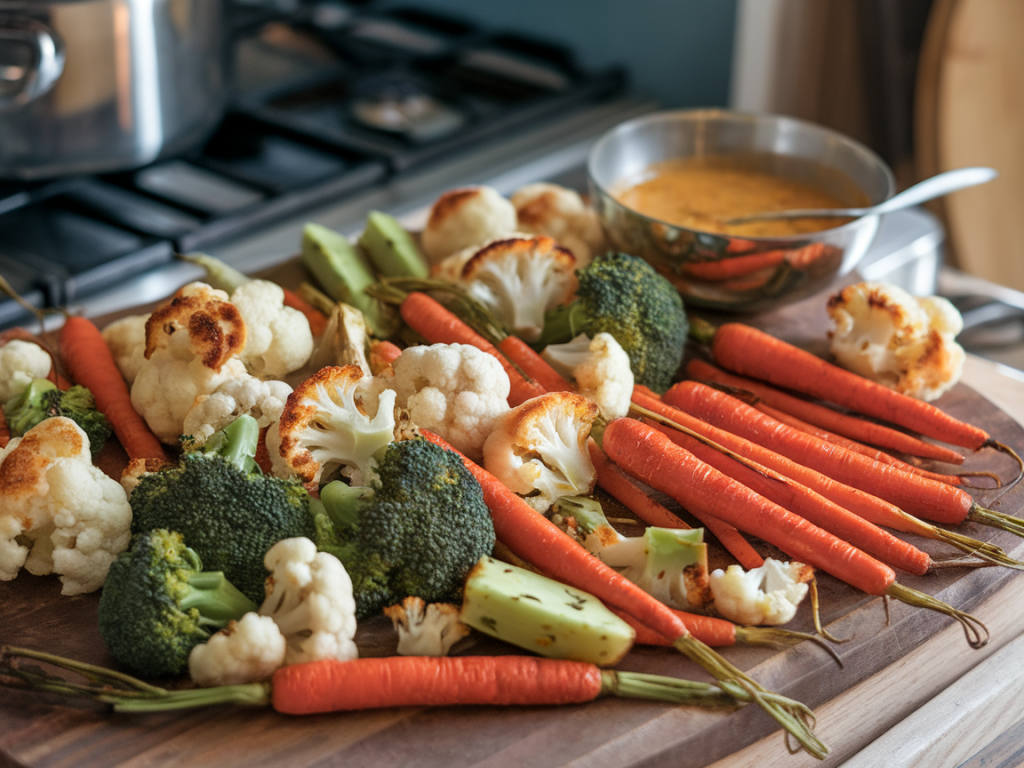
I’ve spent years chasing the perfect roasted vegetable: that sweet, slightly charred exterior with a snappy, not-soggy interior. For busy weeknights, I need something reproducible in 20 minutes that works every time — no guesswork, no soggy broccoli. Here’s the exact routine I use for carrots, broccoli, and cauliflower so they come out crisp, flavorful, and ready to eat or toss into salads, grain bowls, or a quick pasta.
Why 20 minutes works (and what actually matters)
Twenty minutes is tight, so we’re relying on three things: high heat, even small cuts, and a dry surface. High heat caramelizes the sugars quickly; smaller, similar-sized pieces cook through without steaming; and a dry pan/oil prevents the veggies from sitting in moisture. Skip any one of these and you end up with limp veg.
Tools and ingredients I always keep on hand
- Sheet pan — a rimmed half-sheet (18x13") is perfect. Don’t overcrowd.
- Parchment paper or a silicone baking mat (optional, but helps with cleanup).
- A sharp chef’s knife and a sturdy cutting board.
- High smoke-point oil: avocado or grapeseed works great; olive oil is fine if you don’t exceed 450°F/230°C.
- Coarse kosher salt and freshly ground black pepper.
- Optional: cornstarch (or arrowroot) for extra crispness, a squeeze of lemon, and a flaky finishing salt like Maldon.
The exact 20-minute routine (read this aloud like a checklist)
Follow these steps in order. If you multi-task — like I do — you’ll be plating at 20 minutes flat.
- Preheat oven to 450°F / 230°C (or 425°F / 220°C for older ovens). If you have convection, use 425°F / 220°C and turn on convection. While that preheats, start the veg.
- Prep the vegetables:
- Carrots: peel (if you want), and cut on a severe diagonal into 1/3–1/2-inch thick slices. Thicker logs take longer; thin coins burn.
- Broccoli: cut into small florets about 1–1.5 inches across. Trim the stem and slice the thicker stalks into coins so everything cooks evenly.
- Cauliflower: cut into florets the same size as broccoli (1–1.5 inches).
- Dry everything thoroughly. Pat with paper towels or a clean kitchen towel. Water = steam = soggy. I usually spread them on a towel-lined tray and hit them with another towel on top for a quick dry.
- Toss with oil and season: In a large bowl, add vegetables, drizzle with 2–3 tbsp oil total (roughly 1 tbsp per 8 cups of cut veg), and sprinkle 1 tsp kosher salt and ½ tsp black pepper. If you like extra-crisp edges, toss with 1–2 tsp cornstarch before oiling — it gives a light crust without changing the flavor.
- Single layer on the sheet pan. Give each floret or slice breathing room. If pieces overlap, they steam. You can use two pans if needed; the oven handles it fine.
- Roast at 450°F / 230°C for 12 minutes. Put the sheet on the middle rack. Set a timer and walk away — the oven will do the work.
- Flip and finish under the broiler (or stay at 450°F) for 6–8 minutes. At 12 minutes, remove the pan, flip everything once with a spatula, then switch the oven to broil and move the tray to the top rack ~6 inches from the broiler for 4–6 minutes. Watch closely — broilers can char fast. If you don’t want to broil, continue at 450°F for another 6–8 minutes until edges are browned and crisp.
Timing and texture table
| Vegetable | Cut size | Time @450°F (before broil) | Broil/finish |
|---|---|---|---|
| Carrots | 1/3–1/2" diagonal slices | 12 minutes | 4–6 minutes under broil |
| Broccoli florets | 1–1.5" florets | 12 minutes | 4–6 minutes under broil |
| Cauliflower florets | 1–1.5" florets | 12 minutes | 4–6 minutes under broil |
Key troubleshooting — common questions
What if my vegetables are still soft after 20 minutes? Either your pieces were too large or crowded. Cut smaller next time, use two pans, and don’t skip drying. You can also finish with a quick high-heat sauté in a hot skillet for 2–3 minutes to crisp them.
Why does my broccoli turn black on the edges? That’s just charring — flavor! But if it’s all black and bitter, the broiler was too close or too long. Move the rack down one level or reduce broil time.
Can I roast frozen veggies using this routine? Frozen broccoli/cauliflower often release too much water and won’t crisp the same way. Thaw and pat dry, toss with cornstarch and a bit more oil, then roast at 450°F; expect about 5–8 extra minutes and less consistent browning.
Flavors and finishing ideas (5 easy switches)
- Lemon + Parmesan: Squeeze lemon over the hot veg and sprinkle grated Parmesan and flaky salt.
- Spicy Smoky: Toss with smoked paprika, cumin, and a drizzle of honey before broil.
- Asian glaze: Finish with a splash of tamari, toasted sesame oil, and sesame seeds.
- Herby garlic: Toss with chopped parsley, minced garlic (added after roasting so it doesn’t burn), and a squeeze of lemon.
- Balsamic glaze: Drizzle reduced balsamic or store-bought glaze after roasting for a sweet-savory finish.
Make-ahead, storage, and reheating
You can roast a big batch and store in the fridge up to 4 days. Reheat on a sheet pan at 425°F for 6–8 minutes to revive crispness, or use a 350°F toaster oven for 8–10 minutes. Microwaving will soften them — useful if you’re adding to a soup or curry, but not if you want them crisp.
Kid-friendly tips
Kids often prefer milder textures. Cut carrots into thin matchsticks for quicker roasting and milder bite. Tossing a little maple syrup or honey before the broil can make veggies noticeably sweeter and more appealing to picky eaters. If you have a cheese-loving kid, sprinkle the florets with a little cheddar in the last 2 minutes so it melts and helps hide the veggies in plain sight.
This exact 20-minute routine is my go-to for weeknights — reliable, fast, and forgiving. Once you get the timing down and standardize your cuts, roasting veggies becomes less of a culinary mystery and more of a dependable side that actually makes weeknight dinners better.