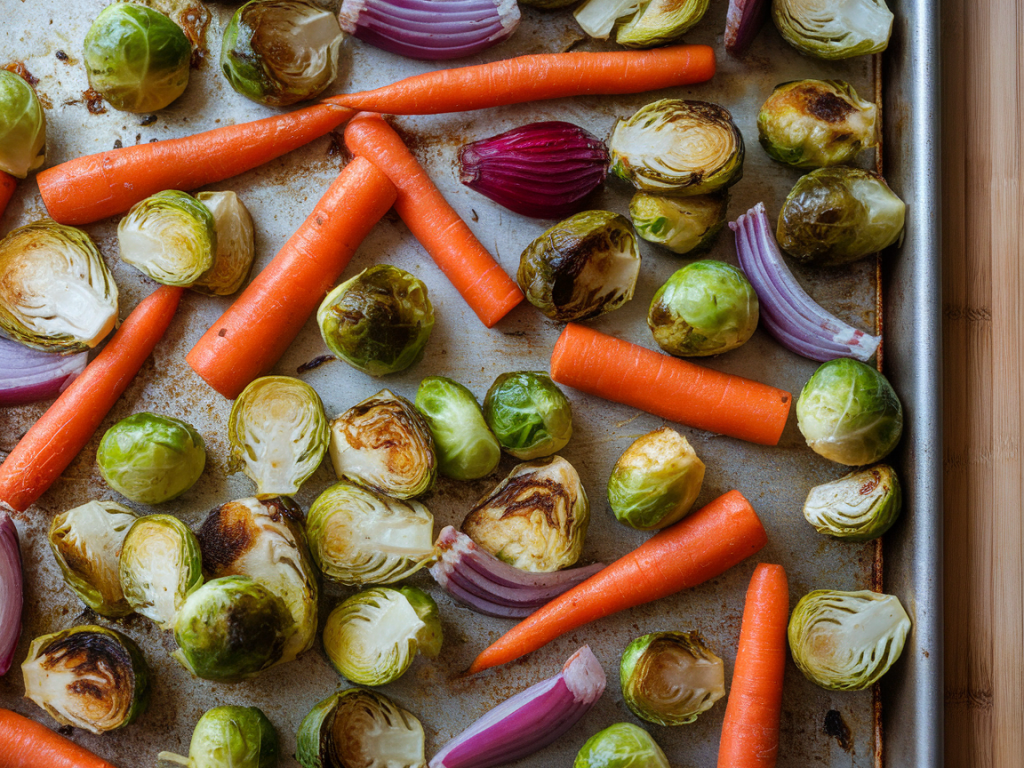
I used to think soggy roasted vegetables were just part of life — a tradeoff for convenience. Then one frantic weeknight I opened the oven to a sad pile of limp carrots and mushy Brussels, and decided enough was enough. After a few experiments, I landed on a timing trick that changed everything: roast vegetables in staggered batches based on how long each type actually needs, and use the oven’s heat to your advantage by preheating the baking sheet. It sounds small, but it makes the difference between limp and lusciously crisp veggies, every time.
The basic idea (one sentence)
Don’t throw every vegetable on the same pan at once — group by size and water content, preheat your sheet, and add the quicker-cooking veggies later so everything comes out browned and crisp instead of over-steamed and soggy.
Why this works
There are three problems that make roasted veggies soggy: crowding, moisture, and mismatched cook times.
By preheating the pan, you get an immediate sear on contact — that helps keep moisture inside the veggie and encourages caramelization. By staggering the timings and using separate pans (or adding items to the pan at different moments), you avoid overcrowding and mismatched doneness.
How I do it step-by-step
Here’s my practical, weeknight-friendly method. It fits a 450°F (230°C) oven, which is my go-to for crispness, and works whether I’m feeding two or six.
Timings cheat-sheet
Use this as a guide for 1-inch-ish pieces at 450°F (230°C) on a hot sheet pan, single layer, not crowded. Adjust by a few minutes depending on pan size, how crowded the pieces are, and how browned you like them.
| Vegetable | Approximate oven time | Notes |
|---|---|---|
| Potatoes (baby or 1" cubes) | 30–40 minutes | Parboil 5–8 min to shave time |
| Carrots (1" slices) | 25–35 minutes | Denser if large — parboil helps |
| Beets (1" cubes) | 35–45 minutes | Need the longest time |
| Cauliflower / Broccoli florets | 20–25 minutes | Nice to add after roots have roasted a while |
| Onion wedges | 20–25 minutes | Sweeten and brown beautifully |
| Zucchini / Summer squash | 8–12 minutes | Add last to avoid mush |
| Bell peppers | 8–12 minutes | High heat caramelizes edges quickly |
| Asparagus | 8–10 minutes | Thin spears need even less time |
| Cherry tomatoes | 6–10 minutes | Roast until skins wrinkle and juices concentrate |
Two pantry tricks that help
Equipment notes (what actually matters)
You don’t need fancy tools, but a few things help:
Seasoning and flavoring tips
Salt is critical, but when you add it matters. If you salt early, it draws moisture out, which can be good if you’re going to roast long and want concentrated flavor. I usually toss everything with salt and oil before the first roast, but if I’m adding delicate herbs (like parsley or basil) or parmesan, I save them for the end so they don’t burn.
For spice mixes, try smoked paprika + garlic powder for a smoky-sweet profile; curry powder + lemon zest for an Indian-inspired blanket; or za’atar + olive oil for an herby, tangy finish. Sprinkle nuts/seeds and herbs after roasting to keep texture.
One-pan weeknight strategy
If you only want one pan, pick vegetables that finish in similar times — for example, roast potatoes with carrots and onions. For variety without fuss, roast a big tray of mixed roots early in the week, then reheat and add quickly roasted greens or peppers to refresh a meal. That makes dinner feel fast without losing texture.
What I learned from mistakes
My earliest batches were a lesson in humility — soggy, steamed messes because I crammed everything together and waited for the slowest item. Staggering cook times felt fussy at first, but it’s just a tiny bit of planning that saves a ton of flavor. And the hot-pan trick? Don’t skip it. The sizzle on contact is the sound of flavor being locked in.
If you want, tell me what vegetables you roast most often and I’ll help map out the timings for a one-sheet or two-sheet plan that fits your weeknight rhythm. Little adjustments — a hot pan, staggered timing, and enough space between pieces — turn roasted veggies from an afterthought into the part of the plate people fight over.