I used to wander the grocery aisles with no real plan and come home with half the things I needed and twice the things I didn’t. Over the years I’ve learned to build a grocery list that actually supports a week of 30-minute dinners — and just as importantly, one I can stick to. Below are the tactics I use every week: a simple system to plan fast dinners, a grocery list template you can copy, and the practical tricks that keep me from impulse buys and midweek takeout.
Start with a realistic 30-minute weeknight menu
The first step isn’t the grocery list — it’s deciding what you’ll cook. I pick 4–5 dinner ideas that reliably finish in 30 minutes from start to finish. My criteria are simple: few ingredients, minimal chopping, and a clear main (protein, pasta, or grain). Typical picks for me are:
Keeping the menu tight like this pays off. When you know the framework of each meal, you can build a focused grocery list and avoid buying random ingredients you’ll never use.
Inventory your pantry and fridge before you write the list
I spend 5 minutes opening the fridge and pantry before I start. That small habit saves money and time because it reveals what I already have and forces me to plan meals that use leftovers. Check for:
Write down the items you already have. I often base a week’s menu around using those items first.
Build the list by category (and shop that way)
When I assemble the list I group everything by section of the store. It keeps my shopping trip fast and helps me resist detours. My categories:
Here’s a simple table I use to map a 5-day, 30-minute menu to a grocery list. You can copy and adapt it.
| Meal | Main Ingredients | Grocery Items (by category) |
|---|---|---|
| One-pan sausage & veggies | Sausage, potatoes, bell pepper | Meat: chicken/sausage • Produce: potatoes, bell pepper • Oil, salt, pepper |
| 15-min stir-fry | Chicken/tofu, frozen stir-fry veg, rice | Meat: chicken or tofu • Frozen: stir-fry mix • Grains: rice • Soy sauce |
| Sheet-pan salmon & green beans | Salmon, green beans, lemon | Seafood: salmon fillets • Produce: green beans, lemon • Olive oil, garlic |
| Quick pasta | Pasta, canned tomatoes, tuna | Grains: pasta • Canned & Jarred: tomatoes, tuna • Parm or grated cheese |
| Grain bowl | Quinoa, beans, canned corn, dressing | Grains: quinoa • Canned: beans, corn • Produce: avocado, lime • Jarred: dressing or ingredients to make one |
Shop for multi-use ingredients
The best way to keep a short list and still feel inspired is to buy ingredients that work across multiple meals. For example:
When an ingredient appears in two or three meals, it earns a place on the list.
Use shortcuts and convenience items strategically
I’m not purist about making everything from scratch. Smart shortcuts keep dinner to 30 minutes without killing flavor:
Brands I reach for depend on quality and price — a Costco rotisserie chicken or a trusted jar of Rao’s tomato sauce are staples in my rotation. Use convenience where it saves time and doesn’t compromise the dish.
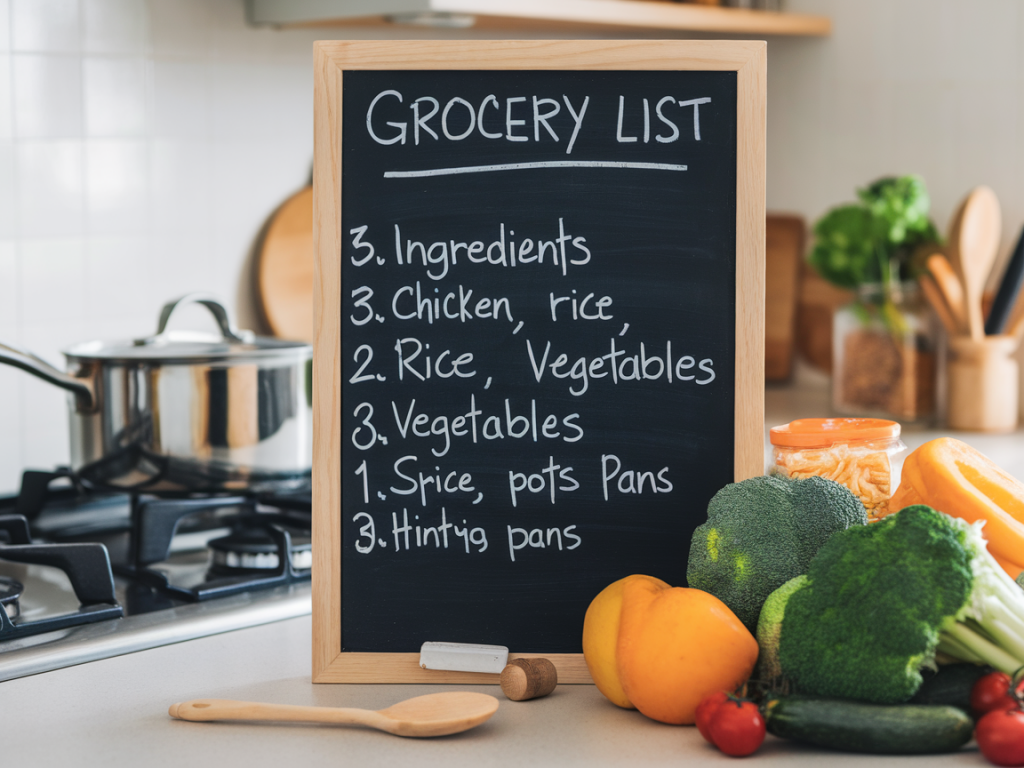
Make a master grocery list template
I keep a master list on my phone with quantities I usually buy. Each week I duplicate it and tweak for the menu. A basic template looks like this:
Save this template in Notes or Google Keep so you can edit it quickly each week.
Stick to the list: practical willpower tricks
Here’s how I make the list actually work when I’m in the store:
Prep once, save time all week
To make 30-minute dinners even faster, I do 20–30 minutes of batch prep right after shopping. Common tasks:
A little prep turns a week of rushed cooking into putting dishes together — which is the whole point.
Quick swaps for when life changes plans
Things come up. If you don’t end up cooking a planned meal, swap intelligently rather than ordering out immediately. My go-tos:
These swaps keep groceries from going to waste and get dinner on the table in minutes.
Track what worked and what didn’t
After a few weeks I look back at what I actually used and what I wasted. I track two things:
This tiny feedback loop makes future grocery lists smarter and shorter. Over time you’ll find a rhythm that brings variety without chaos.
If you want, I can share my weekly printable grocery list (categorized and ready to edit) or a 30-minute recipe pack tailored to dietary needs or a tight budget. Drop a note and I’ll put it together.