I tried feeding a family of four on a $5 week not because I think everyone should do it, but because I wanted to see what's actually possible when money is the only limit. I’ve stretched ingredients for years — baby food that became dinner, casseroles that masked the last cup of rice — but this was a different challenge. What follows is the honest shopping list I used, the rules I set for myself, realistic expectations about nutrition and flavor, and practical tips you can use to stretch whatever grocery money you do have.
The ground rules (because honesty matters)
I set a few simple rules before I started, and I recommend you consider them if you try something like this:
I didn’t raid my pantry for fresh meat, frozen dinners, or fancy condiments. Basics like salt, pepper, oil, and a handful of spices were allowed.No food assistance or community meals were counted in the $5 — this is purely the grocery spend. If you rely on food banks or SNAP, use them first; my experiment isn’t a suggestion to avoid help.Prices are US-store approximations and vary wildly by region. I used low-cost store brands and bulk items where possible.The goal was filling, predictable meals — not gourmet. Flavor comes from good technique and a few smart tricks, not expensive ingredients.The honest $5 shopping list (table)
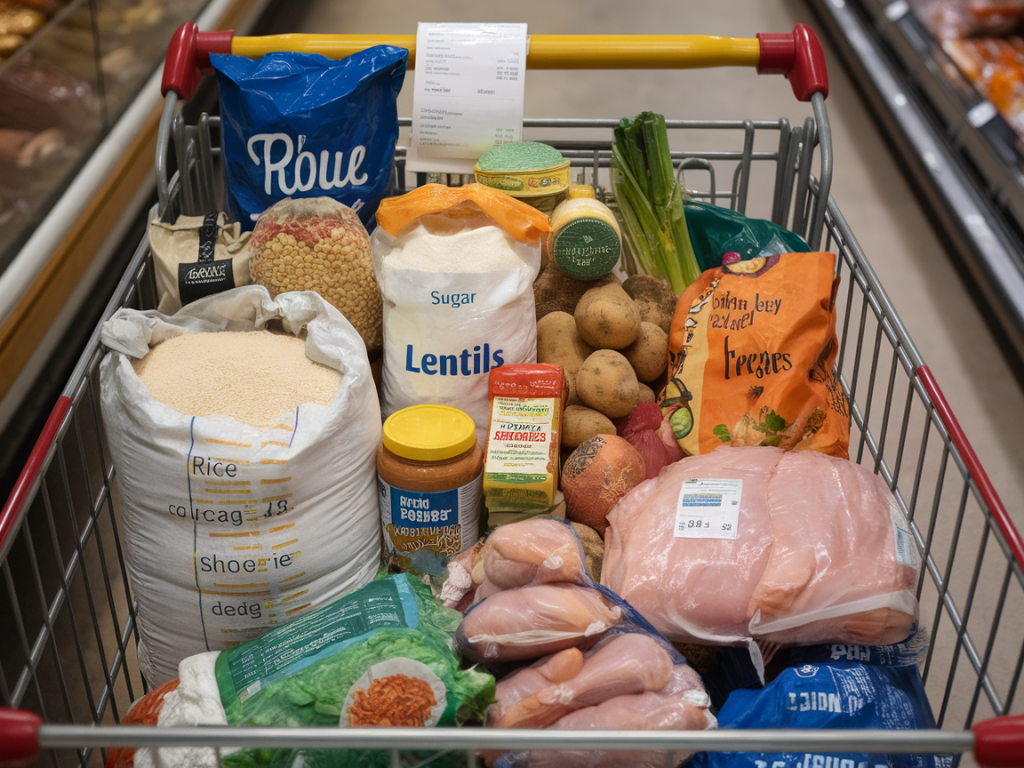
Below is the list I bought. I shopped with coupons, picked clearance items, and bought the cheapest store-brand versions. Prices are rounded and will vary.
| Item | Qty | Estimated price | Why I bought it |
| Dry white rice | 1 lb | $1.00 | Stretches meals, neutral base |
| Dry pinto or black beans | 1 lb | $1.00 | Protein, filling, cheap when dried |
| Eggs (dozen) | 6 eggs (bargain carton) | $1.50 | Protein, breakfast, scrambles, binding |
| Carrots (bag) | 1 lb | $0.50 | Veg, bulk, long shelf life |
| Onion (single) | 1 | $0.40 | Flavor base |
| Loaf of cheap bread / store rolls | Half loaf / discounted | $0.60 | Breakfast, sandwiches, soaking for fritters |
Total: approx. $5.00
Why these items — and what you can actually make
It’s not glamorous: rice, beans, eggs, a carrot, an onion, and a bit of bread. But with simple techniques these ingredients create a surprising number of meals:
Rice and beans — the backbone. Cooked with onion and seasoned with salt and any dried herbs you have, this feeds a family when portioned smartly.Egg fried rice — stretch rice by adding scrambled eggs and grated carrots for texture and sweetness.Bean mash sandwiches — mash beans with sautéed onion, a little oil (if you have it), and pile on bread for a protein-packed sandwich.Carrot-onion soup — simmer chopped carrot and onion with water, salt, and a starchy spoonful of rice to thicken. Blend or mash for a creamy bowl.Breakfast toast or egg sandwiches — eggs + toast make a filling start to the day.A simple meal plan for the week
This plan assumes careful portioning and leftovers used creatively. It’s not nutritionally complete long-term, but it will fill hungry kids and adults for a week in a pinch.
Day 1 — Dinner: Rice and beans with sautéed onions. Keep portions conservative and reserve the best bits (bigger pieces of carrot) for kids if needed.Day 2 — Breakfast: Toast and fried egg. Dinner: Bean mash sandwiches + carrot sticks.Day 3 — Lunch: Leftover rice fried with egg and shredded carrot. Dinner: Carrot-onion soup with torn bread for dipping.Day 4 — Breakfast: Scrambled eggs and toast. Dinner: Beans stewed with onions and rice (bulk up the beans with extra onion and carrot).Day 5 — Lunch: Leftover soup. Dinner: Pan-fried bread “crouton” topped with mashed beans and a fried egg (open-faced).Weekend — Mix and match leftovers. Turn leftover rice into patties (bind with egg, fry) or bake a simple rice and egg casserole if you have access to an oven.Cooking and batch tips that actually save time and money
Cook rice and beans in bulk at the start of the week. Store in the fridge and use within 4–5 days.Soak beans overnight if you can — they cook faster and are easier to digest. If you don’t have time, simmer longer and skimm foam.Panfry grated carrot and onion in a small amount of oil (or water if you’re oil-free). This concentrates flavor and makes simple meals feel intentional.Use eggs as a binder — leftover rice + mashed beans + egg = patties that fry up crispy and satisfying.Freeze any extra portions in small containers. Even one saved meal prevents a grocery splurge later.Stretching, swaps, and store tricks
Buy dried beans instead of canned — far cheaper by weight. If you only have a dollar or two to spare later, a can of tomatoes or a bag of frozen mixed vegetables can dramatically improve meals.Watch clearance shelves for marked-down bakery items and soon-to-expire produce. I’ve often found great carrots and bread for pennies.Use bulk bins when possible — sometimes rice or oats are cheaper that way and you can buy exactly how much you need.Store brands are your friend. I often buy the cheapest store eggs and rice; quality for basic cooking is fine.Barter and trade: if you or a neighbor grows herbs or has extra eggs, swap to diversify meals.When $5 isn’t enough (and realistic next steps)
Let’s be clear: $5 a week is a desperate budget. Nutritionally it’s hard to be adequate long-term — limited fresh fruit, no dairy, minimal protein variety. If you can stretch to $10–$15, add these high-impact items:
Canned tomatoes — flavor and acidity that brightens everything.Frozen mixed vegetables — add color, vitamins, and convenience.Peanut butter — calorie-dense and kid-friendly protein on toast.Oats — cheap, filling breakfasts with long shelf life.If you’re consistently below what’s needed, seek local food assistance programs and community kitchens — they exist to fill gaps, and using them doesn’t mean you failed. It means you’re managing responsibly.
Feeding four on $5 a week taught me a lot about creativity, shame, and priorities. You can stretch a little flour of options into several filling meals, but you can’t replace variety or vitamins with cleverness alone. Use the list and tips above if you’re in a bind, but plan to add nutrient-dense items as soon as you can. If you want a printable version of this shopping list, or a slightly more generous $10 or $15 plan with recipes, I can put that together next — just say which budget you want me to stretch next.