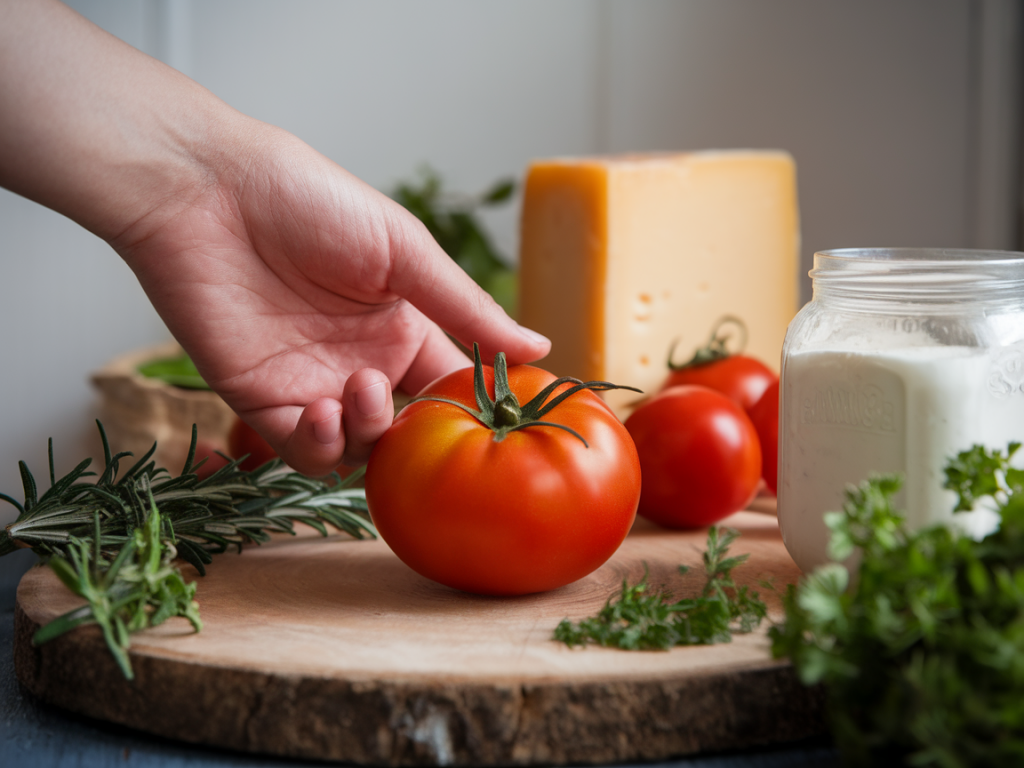
I don’t like waste. If I open the fridge and find a sad bunch of herbs, a couple of soft tomatoes, or half a carton of milk looking forlorn, I get a little thrill figuring out how to turn them back into dinner. Over the years I’ve collected a handful of pantry-and-fridge hacks that reliably stretch ingredients, save money, and — most importantly — keep flavor where it belongs. Below are five simple pantry hacks that rescue tomatoes, herbs, and dairy before they get relegated to the compost.
Rescue soft tomatoes by turning them into quick passata or roasted tomato concentrate
Tomatoes that are split, soft, or past their salad-best days are perfect for cooking. I keep a jar in the freezer labeled “tomato rescue” and fill it with chopped tomatoes whenever they start to look tired.
Quick stovetop passata: Roughly chop soft tomatoes, sauté an onion and a couple of garlic cloves in olive oil, add the tomatoes, a pinch of salt, and simmer until thick. Blitz with an immersion blender for a smooth sauce. I portion this into 1-cup freezer containers or zip-top bags (lay them flat) so I can grab one for weeknight pasta or shakshuka.Roasted tomato concentrate (shelf-protecting shortcut): Halve or quarter tomatoes, toss with olive oil, salt, and a few sprigs of thyme, and roast at 220°C/425°F until deeply caramelized. Cool, then puree and freeze in small jars. The roast deepens the flavor so you can add a spoonful to soups, stews, or sauces for instant richness.If you prefer jarred products, a teaspoon of tomato paste (I like Mutti or Cento) added to sautéed tomatoes brightens things up. But homemade frozen passata tastes cleaner and costs less when tomatoes are on sale.
Keep herbs usable for weeks: oil cubes, dry bundles, and fridge bouquets
Herbs are tiny flavor bombs that often go to waste because they wilt fast. I use three easy methods depending on how I plan to use them.
Herb-oil ice cubes: Chop basil, parsley, or cilantro, mix with olive oil, and spoon into ice cube trays. Freeze, then pop cubes into zip bags. Drop one into a simmering pan for stir-fries, soups, or sauces. Basil + oil cubes are my go-to for pesto-like flavor without the fuss.Quick dry in the oven: For rosemary, thyme, and oregano, I spread sprigs on a baking sheet and dry them at the lowest oven setting for 20–40 minutes. Strip the leaves and store in airtight jars. They won’t taste as bright as fresh, but they’re perfect for long-cooked dishes.Fridge bouquet: For tender herbs like cilantro and parsley, stand bunches upright in a jar of water like a flower bouquet, cover loosely with a plastic bag, and store in the fridge. Change the water every couple of days. This keeps them crisp for up to two weeks.One extra trick: if you have basil and want pesto but not a whole batch, blitz a small handful with a drizzle of oil and a pinch of salt, then freeze in a small container. Spoon out as needed.
Freeze dairy smartly: cheese, butter, and milk hacks that actually work
Dairy can be intimidating to freeze — people worry about texture changes — but with a few simple rules you can extend shelf life without sacrificing usability.
Butter: Butter freezes beautifully. I divide blocks into 100 g portions, wrap them tightly in cling film and foil, and stash them in the freezer. Pull one out to soften quickly on the counter when you need it. For compound butters (garlic-herb, lemon-thyme), mix, roll into a log in parchment, and freeze. Slice off rounds for steaks, fish, or quick bread.Cheese: Hard and semi-hard cheeses (cheddar, Parmesan, pecorino) can be frozen grated. Freeze in zip bags with as much air removed as possible. Use frozen grated cheese directly on pizzas and casseroles. Soft cheeses (ricotta, cream cheese) change texture a bit after thawing but are still perfect for cooking — lasagna, baked pastas, or cheesecake. I portion cream cheese into recipe-sized portions (125 g) before freezing.Milk and cream: Milk freezes but separates on thawing. Shake well and use in cooking, baking, or smoothies rather than drinking straight. If you only need a little cream for a sauce, freeze leftover cream in ice cube trays — one cube is roughly a tablespoon. For whipping cream, freeze in small portions and thaw in the fridge overnight; whisking can be tricky, so use it mostly for cooking.Turn leftover milk or yogurt into cultured dairy — labneh, buttermilk, and paneer
Rather than toss near-expiry yogurt or milk, I treat them like pantry ingredients and transform them into something new.
Labneh from yogurt: Strain plain yogurt through a cheesecloth or clean kitchen towel over a bowl for 6–12 hours. The result is a thick, tangy spread that’s fantastic with olive oil and za’atar, or mixed with herbs for a quick dip. It stores for a week in the fridge and freezes well for cooking.Buttermilk substitute: If a recipe calls for buttermilk but you only have milk, add a tablespoon of lemon juice or vinegar to a cup of milk and let it sit for 5 minutes. This does the job for pancakes, biscuits, or cakes and prevents having a half carton languishing.Paneer/ricotta from milk: Heat milk to a simmer, add an acid (vinegar or lemon), and strain the curds — instant paneer or ricotta. It’s fresh, cheap, and more rewarding than buying small tubs at the store.Make tomato-and-dairy combos that rescue both: quick baked feta, tomato confit, and shakshuka
Some of my favorite “rescue” recipes combine tomatoes and dairy in ways that highlight both ingredients and are ridiculously simple to prepare.
Baked feta with tomatoes: Toss cherry or rescued chopped tomatoes with olive oil, garlic, and oregano, nestle a block of feta (or frozen feta thawed) on top, and bake until the cheese softens and tomatoes blister. Serve with crusty bread. This works equally well with roasted passata or tomato concentrate stirred through after baking.Tomato confit with cream or labneh: Slow-roast halved tomatoes in oil with garlic and thyme at a low temperature until jammy. Spoon over grilled bread and top with a dollop of labneh or ricotta for an effortless appetizer or light dinner.Shakshuka — the always-handy weeknight dish: Start from frozen passata or canned tomatoes, add onions, peppers if you have them, and crack eggs directly in the simmering sauce. Spoon a bit of labneh or crumbled soft cheese on top before serving.These hacks aren’t about culinary showmanship — they’re about making groceries work harder and keeping the kitchen predictable. With a few small habits — freezing in portion sizes, turning soon-to-expire ingredients into longer-lived forms, and combining rescued tomatoes with simple dairy treatments — you can cut waste and keep dinner interesting on busy nights.