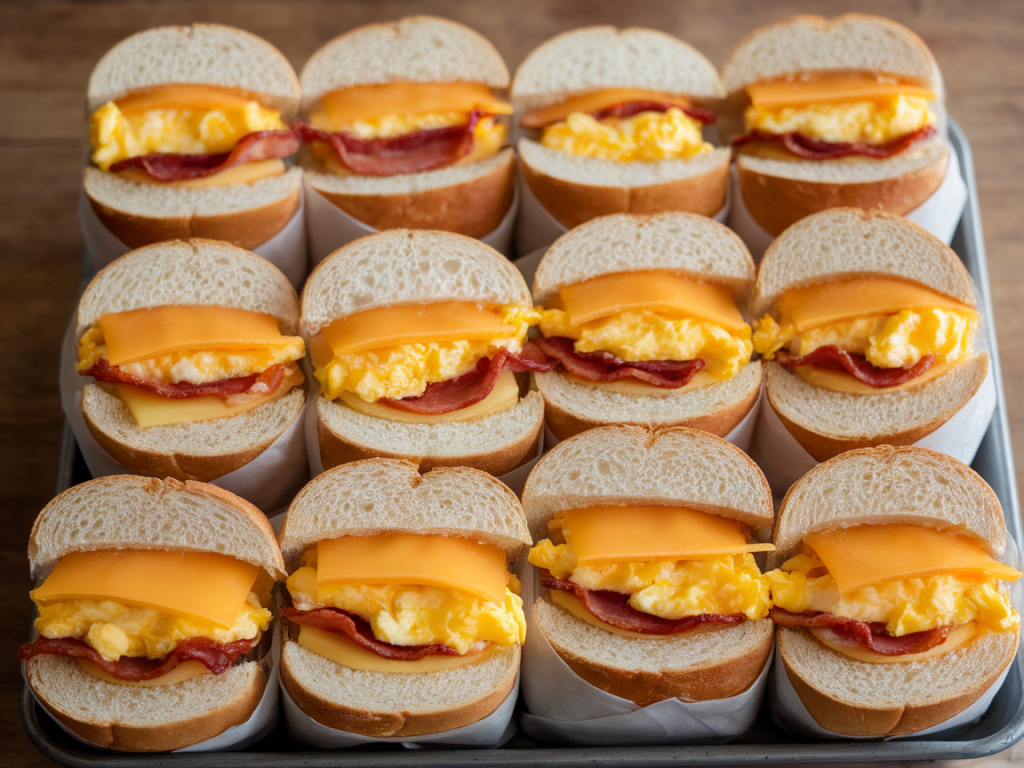
I test a lot of short-cut strategies in my kitchen, and one that consistently saves mornings is batch-freezing breakfasts. If you’re juggling school drop-offs, early meetings, or just the perpetual scramble in the kitchen at 7 a.m., making 10 grab-and-go breakfast sandwiches in one hour is a game changer. I’ll walk you through the exact plan I use, why it works, and how to reheat these so they taste almost as good as fresh.
Why batch-freeze breakfasts?
Busy families, commuters, and anyone who hates wasted food will appreciate this. Batch-freezing:
- saves time — one hour on a weekend can replace dozens of chaotic mornings;
- reduces decision fatigue — breakfasts are ready and predictable;
- cuts waste — use up odds and ends of cheese, veggies, or leftover meats;
- stretches budget — buying eggs, bread, or deli meat in bulk brings cost per sandwich down.
What I make and why it’s reliable
My go-to is a simple egg + cheese + optional protein sandwich on an English muffin, bagel, or sliced roll. They’re sturdy, freeze well, and reheat quickly. I aim for balance: enough moisture to stay pleasant, not so much that the bread gets soggy after freezing.
Common variations that work: cheddar + scrambled egg + breakfast sausage, pepper jack + egg white + spinach + turkey, or Swiss + ham + fried egg for a diner-style vibe. If you prefer vegetarian, roasted mushrooms or a slab of seasoned tofu are great additions.
Equipment and ingredients
Having the right tools keeps the hour realistic. Here’s what I use:
- Large nonstick skillet or two medium skillets
- Baking sheet lined with parchment
- Mixing bowl and fork/whisk
- Zip-top freezer bags or vacuum sealer (optional)
- Small square of parchment or wax paper to separate sandwiches
- 10 English muffins (or 10 bagels/rolls)
- 10 eggs (or 12 egg whites/8 eggs + 4 whites, depending on thickness)
- Cheese slices (10) and optional proteins (10 sausage patties, or 200–300 g deli meat)
Step-by-step: make 10 sandwiches in one hour
This timeline assumes you’re working efficiently and maybe have one helper. I use a skillet on medium heat to cook eggs slightly underdone so they won’t overcook on reheating.
- 0–5 minutes: Preheat oven to 350°F (175°C). Split and toast the English muffins slightly — they’ll finish crisping when reheated. Line a baking sheet with parchment.
- 5–15 minutes: Whisk eggs (10 eggs) with a pinch of salt and pepper. If you want thinner, fold in a splash of milk or water. Pre-shape sausage into 10 thin patties if using.
- 15–30 minutes: Cook proteins: brown sausage patties in skillet (about 3 minutes per side). Transfer to the baking sheet and keep warm in the oven. If using deli meat, warm briefly in the pan or skip this step.
- 30–45 minutes: Make eggs: for even sandwiches I like folded eggs (similar to a square folded omelette) — pour an even amount of egg into the skillet, tilt to spread, cook until set but still moist. I do two or three at a time depending on pan size. Immediately place on the bottom halves of muffins.
- 45–55 minutes: Assemble: cheese on egg, protein on top of cheese, crown with muffin top. Let cool 2–3 minutes (hot fillings trap steam and cause freezer frost if frozen immediately).
- 55–60 minutes: Wrap and freeze: individually wrap each sandwich in a square of parchment and then place in a freezer bag (squeeze out air) or vacuum-seal. Label with date. Move to the deep freezer.
Quick table: timing and storage
| Task | Time | Notes |
|---|---|---|
| Prep & toast muffins | 0–5 min | Lightly toasting prevents sogginess |
| Cook proteins | 15–30 min | Cook fully for food safety |
| Cook eggs | 30–45 min | Set but slightly moist |
| Assemble & cool | 45–55 min | Brief cool prevents freezer condensation |
| Wrap & freeze | 55–60 min | Label with date; store up to 3 months |
Best wrapping and freezing method
My routine: wrap each sandwich individually in parchment, then into a zip-top freezer bag. For longer storage, vacuum sealing is excellent. Parchment prevents cheese from sticking and lets you unwrap quickly at the edge to reheat cleanly.
Label the bag or use a Sharpie on the bag with name and date. I usually make two types and label them “Sausage + Cheddar” and “Egg + Spinach + Swiss” so mornings are effortless.
Reheating without losing texture
Reheating properly prevents rubbery eggs and soggy bread:
- Microwave (fast): Remove outer bag. Wrap in a damp paper towel and microwave 60–90 seconds on high, flipping halfway. For bagels or very dense rolls, open out the sandwich and microwave only the egg side 45–60 seconds, then toast the bread quickly.
- Oven or toaster oven (best texture): Preheat to 350°F (175°C). Place wrapped sandwiches (foil if desired) on a baking sheet for 12–15 minutes if frozen, or 8–10 if thawed. This keeps muffins crisp.
- Air fryer: 350°F (175°C) for 6–8 minutes from frozen; flip once. Great for crisp edges and melty cheese.
Common questions I get
How long do they keep in the freezer? I keep mine up to 3 months. After that flavor and texture deteriorate. If you vacuum-seal, they may last a bit longer, but I recommend eating within 2–3 months.
Do eggs get rubbery? They can if you overcook or reheat too aggressively. Cook eggs until just set and reheat gently. A damp paper towel in the microwave helps maintain moisture.
What about soggy bread? Toasting the bread first and allowing sandwiches to cool before wrapping reduces moisture build-up. For very soft rolls, finish in a toaster oven or air fryer to crisp the crust after reheating.
Can I use frozen veggies? Yes. Sauté and drain excess moisture before adding to the egg so freezing doesn’t create ice crystals inside the sandwich.
Are these safe for kids? Absolutely — just cut to size and reheat until piping hot. For younger kids, butter the inside lightly and use milder cheeses.
My favorite shortcuts and swaps
- Buy pre-cooked sausage patties (Jimmy Dean, eg) to shave off cooking time.
- Use English muffin thins if you want smaller portions for little eaters.
- Swap jarred pesto or salsa for a smear of flavor instead of deli meats.
- Make a big batch of scrambled eggs in a 9x13 pan, cool, then cut into rounds with a biscuit cutter to speed assembly.
One hour, a little planning, and you'll have ten reliable breakfasts that make mornings manageable. Batch-freezing isn’t about replacing fresh cooking every day — it’s about having a dependable backup that tastes good and gets everyone out the door without drama.